

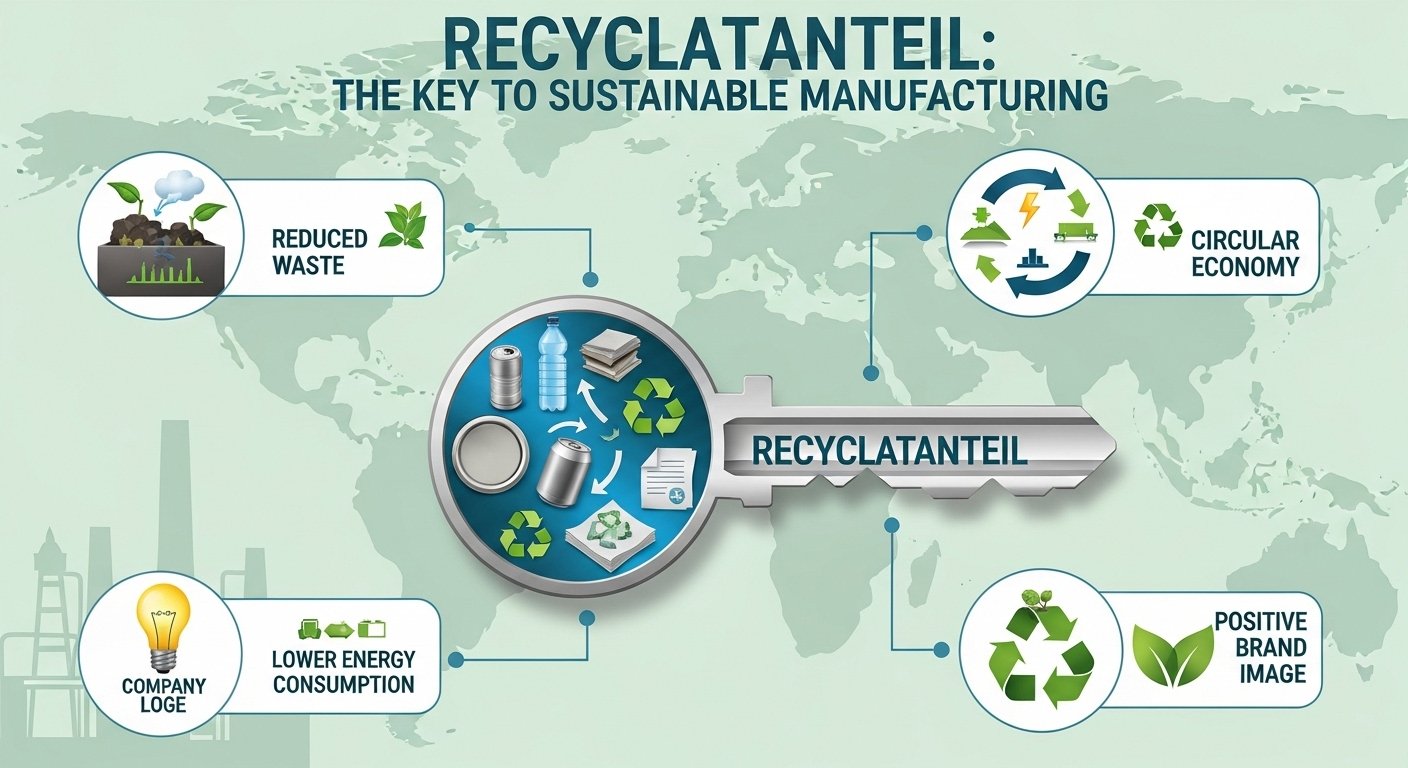
Sustainable manufacturing is increasingly vital in today’s global economy, and Recyclatanteil has emerged as a cornerstone of environmentally conscious production. By integrating recycled materials into industrial processes, manufacturers reduce their environmental footprint while maintaining product quality. Understanding the role of Recyclatanteil not only helps industries comply with regulations but also promotes innovation in material reuse. Companies adopting this strategy can optimize resource utilization, minimize waste, and strengthen their sustainability credentials in competitive markets.
The significance of Recyclatanteil extends beyond regulatory compliance, influencing consumer perception and brand value. With growing awareness of environmental impact, businesses leveraging recycled content in their products appeal to eco-conscious consumers. Implementing Recyclatanteil requires careful planning and investment in processing technologies, yet the long-term benefits, including reduced raw material dependency and cost savings, outweigh initial challenges. Sustainable production strategies anchored in Recyclatanteil are thus integral to modern manufacturing practices.
Understanding Recyclatanteil in Manufacturing
Recyclatanteil refers to the proportion of recycled material incorporated into a product or manufacturing process. This metric serves as a benchmark for measuring sustainability in industries ranging from plastics and textiles to electronics and automotive parts. High Recyclatanteil percentages indicate a greater reliance on recycled inputs, reflecting an organization’s commitment to reducing environmental impact. Tracking and optimizing Recyclatanteil helps manufacturers balance quality with sustainability, enabling responsible production without compromising performance or consumer satisfaction.
Industries adopting Recyclatanteil strategies benefit from both ecological and economic advantages. Integrating recycled materials reduces dependence on virgin resources, lowering energy consumption and carbon emissions. Moreover, improved waste management through Recyclatanteil practices fosters circular economy models, allowing materials to circulate within the production cycle instead of ending in landfills. As global standards for sustainability tighten, manufacturers prioritizing Recyclatanteil gain a competitive edge, signaling responsibility and innovation to stakeholders.
Benefits of High Recyclatanteil in Products
Maximizing Recyclatanteil in products can significantly impact environmental conservation. By replacing non-renewable raw materials with recycled alternatives, manufacturers minimize resource depletion and reduce the ecological footprint of production. In sectors such as packaging and construction, high contributes to lower greenhouse gas emissions and energy consumption. The adoption of recycled content also encourages suppliers to invest in recycling technologies, creating an interconnected ecosystem supporting sustainable practices across the supply chain.
Consumer demand for eco-friendly products further underscores the advantages of increasing Recyclatanteil. Modern buyers are more conscious of the sustainability profile of items they purchase, and products with certified recycled content appeal to this audience. Beyond environmental benefits, companies incorporating often realize cost efficiencies by utilizing readily available recycled materials. The combination of ecological impact, brand reputation, and economic gains makes a strategic priority in sustainable manufacturing initiatives.
Challenges in Implementing Recyclatanteil
Despite its benefits, integrating Recyclatanteil into manufacturing poses several challenges. Recycled materials can vary in quality, affecting consistency and performance of final products. Ensuring that meets stringent industry standards requires robust sorting, processing, and testing systems. Manufacturers must also navigate supply chain limitations, as the availability of high-quality recycled inputs may fluctuate, impacting production planning and costs.
Another critical challenge is balancing cost and sustainability objectives. While Recyclatanteil reduces raw material expenses in the long term, initial investments in recycling infrastructure and technology can be significant. Companies must weigh these upfront costs against future environmental and economic benefits. Overcoming these hurdles necessitates strategic planning, collaboration with recycling partners, and adoption of advanced material processing techniques to maintain quality while achieving high targets.
Measuring Recyclatanteil Effectively
Accurate measurement of Recyclatanteil is essential for assessing sustainability performance. Manufacturers often calculate the percentage of recycled content relative to total material input, providing a clear indicator of environmental impact. Tracking over time enables companies to benchmark progress, optimize resource allocation, and make data-driven decisions. Tools such as life-cycle assessments and sustainability reporting frameworks further support transparent measurement of recycled material usage.
Integration of digital solutions enhances Recyclatanteil tracking by offering real-time data and predictive insights. Advanced software allows manufacturers to monitor recycled material streams, identify inefficiencies, and forecast sustainability outcomes. Combining quantitative metrics with qualitative evaluation of material quality ensures that improvements do not compromise product performance. Effective measurement strategies are therefore vital to embedding in corporate sustainability goals.
Case Study Table: Recyclatanteil Impact in Manufacturing
| Industry | Typical Recyclatanteil (%) | Environmental Benefit | Economic Advantage |
|---|---|---|---|
| Packaging | 40–60 | Reduced plastic waste, lower CO2 | Savings on raw materials |
| Automotive | 20–50 | Less mining of metals, lower energy | Lower cost of secondary materials |
| Electronics | 10–30 | Reduced e-waste, resource recovery | Recycling incentives and subsidies |
| Construction | 30–70 | Decreased landfill waste, energy saving | Reduced material purchase costs |
The table above demonstrates the positive effects of across various industries. Each sector benefits differently, but the common outcomes include environmental preservation and cost efficiencies. Tracking these metrics helps businesses prioritize materials with higher recycled content and encourages industry-wide adoption of sustainable practices.
Future Trends in Recyclatanteil
The future of Recyclatanteil is closely linked to advancements in material science and recycling technology. Innovations in chemical recycling, biodegradable composites, and automated sorting systems are expected to increase the proportion of recyclable content in products. As global environmental regulations tighten, manufacturers will face higher expectations to incorporate, driving both innovation and sustainability in production processes.
Consumer behavior and corporate responsibility trends will continue to influence Recyclatanteil adoption. Brands investing in higher recycled content gain credibility and market differentiation, fostering loyalty among environmentally conscious customers. Collaborative efforts across industries to standardize measurement and reporting of will further enhance transparency and accountability. Ultimately, is poised to become a benchmark for sustainable manufacturing in the coming decades.
Conclusion
Embracing Recyclatanteil is no longer optional for forward-thinking manufacturers; it is a strategic necessity. By integrating recycled content into production, companies reduce environmental impact, optimize resource efficiency, and meet consumer expectations. Challenges such as material quality variability and cost can be mitigated through technology, planning, and collaboration. The benefits, however, span ecological preservation, economic savings, and brand enhancement, making a key driver of sustainable manufacturing.
As the global emphasis on sustainability intensifies, Recyclatanteil will remain a critical metric for assessing industrial environmental performance. Companies that prioritize recycled content in their products not only contribute to a circular economy but also gain competitive advantages in evolving markets. Ultimately, the strategic adoption of ensures that modern manufacturing aligns with both ecological imperatives and economic objectives, paving the way for a greener, more responsible future.