

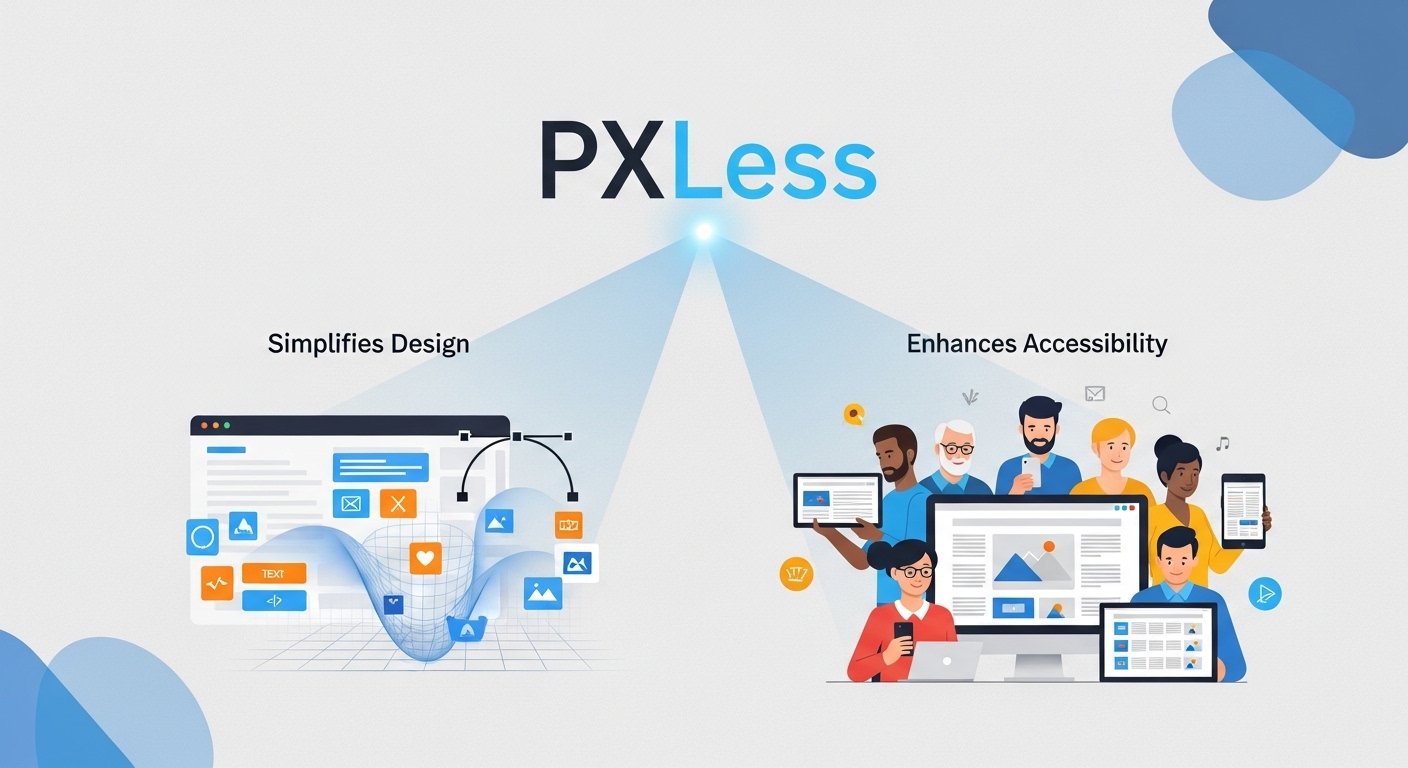
In the ever-evolving world of web and app development, creating accessible and user-friendly designs can often feel like navigating a maze. PXLess: How It Simplifies Design and Enhances Accessibility introduces a revolutionary approach to digital design that prioritizes simplicity without compromising functionality. By removing unnecessary complexity in pixel management and layout structures, PXLess allows designers to focus on crafting visually appealing interfaces that are easily navigable for all users. Accessibility is no longer an afterthought; it becomes an integral part of the design process, ensuring inclusivity across platforms.
This innovative system not only accelerates development timelines but also aligns with modern accessibility standards. Companies adopting PXLess report faster prototyping, reduced design errors, and improved user satisfaction. By standardizing how spacing and sizing are applied, PXLess minimizes the cognitive load on designers and developers, making the digital environment more intuitive. The technology bridges the gap between creative freedom and practical usability, positioning itself as a critical tool for both startups and large-scale enterprises.
Understanding PXLess in Modern Design
The rise of responsive design has placed a greater emphasis on efficiency and accessibility. PXLess integrates seamlessly into design workflows, replacing the need for complex pixel calculations with dynamic scaling rules. Designers can now apply consistent spacing and alignment effortlessly, which enhances both aesthetics and usability. By simplifying pixel-level adjustments, PXLess reduces inconsistencies across devices, ensuring that websites and apps appear cohesive on mobile, tablet, and desktop platforms. This uniformity is especially crucial for accessibility, as it ensures predictable navigation patterns for users relying on assistive technologies.
Beyond technical advantages, PXLess reshapes the philosophy of design itself. It encourages a minimalist yet functional approach, where every element has a purpose and contributes to a positive user experience. This perspective reduces clutter and visual noise, which are common barriers for users with cognitive or visual impairments. PXLess’s methodology emphasizes clarity and accessibility, promoting designs that are not only visually appealing but also inclusive and efficient for every user demographic.
| Feature | Traditional Design Approach | PXLess Approach |
|---|---|---|
| Pixel Management | Manual adjustments | Automated scaling |
| Accessibility Integration | Afterthought | Built-in functionality |
| Responsiveness | Limited | Seamless across devices |
| Design Consistency | Variable | Standardized |
Simplifying Pixel Management
Pixel management has historically been one of the most time-consuming aspects of interface design. Designers often spend hours fine-tuning spacing, margins, and padding to achieve a balanced look. PXLess: How It Simplifies Design and Enhances Accessibility eliminates this burden by introducing automated pixel scaling and alignment guidelines. With PXLess, developers can define base units and allow the system to adjust sizes proportionally, ensuring consistency throughout the design. This not only saves time but also reduces errors that can compromise the user experience.
The implications for accessibility are profound. Consistent spacing and layout structures help users with visual impairments or motor challenges navigate interfaces with greater ease. Elements that follow predictable patterns enhance cognitive processing, allowing users to engage more effectively with content. By focusing on universal design principles, PXLess ensures that accessibility is an inherent part of every design decision, rather than a reactive compliance measure.
Enhancing Accessibility Standards
Accessibility is no longer optional in digital design. Legal regulations, coupled with growing consumer expectations, have made inclusive design a business imperative. PXLess addresses this need by embedding accessibility considerations directly into the design workflow. From color contrast recommendations to touch-target sizing, PXLess provides automated guidance to meet accessibility standards such as WCAG 2.1. Designers no longer need to retrofit accessibility features after the fact; they are part of the design from inception.
Moreover, PXLess helps organizations measure and track accessibility performance across projects. The system can generate reports on potential barriers, providing actionable insights for improvement. This proactive approach reduces the risk of non-compliance and strengthens brand reputation. In a world where inclusivity is increasingly tied to customer loyalty, PXLess offers a strategic advantage by aligning design practices with accessibility goals while maintaining efficiency and creative flexibility.
| Accessibility Aspect | Challenge Without PXLess | PXLess Solution |
|---|---|---|
| Color Contrast | Inconsistent | Automated suggestions |
| Keyboard Navigation | Manual testing needed | Built-in compliance checks |
| Touch Targets | Varies per element | Standardized sizing |
| Screen Reader Compatibility | Retrofits required | Integrated guidance |
The Impact on Developer Workflows
Introducing PXLess into a development pipeline fundamentally changes how teams collaborate. Designers and developers can now work from a shared framework that reduces miscommunication and iteration cycles. By establishing standardized units and accessibility rules, PXLess creates a common language for teams, minimizing revisions and enhancing project timelines. This streamlined workflow is particularly valuable for large-scale projects where multiple teams work across different modules or platforms.
Additionally, PXLess fosters innovation by removing repetitive, technical burdens from designers. With more mental bandwidth dedicated to creative problem-solving, teams can experiment with layout variations and interactive features without compromising accessibility. Developers benefit from a reduction in bug reports related to inconsistent spacing or misaligned elements, improving overall software quality. In essence, PXLess acts as both a design enhancer and a workflow optimizer.
Future Trends and Predictions
Looking ahead, PXLess is poised to influence not just design methodology but also the broader landscape of digital accessibility. As artificial intelligence and adaptive technologies become more prevalent, PXLess could integrate predictive design adjustments based on user behavior and accessibility needs. This would allow interfaces to dynamically respond to individual preferences, creating a truly personalized and inclusive experience. Companies embracing PXLess early are likely to set new standards in both efficiency and user satisfaction.
Furthermore, the demand for accessible, mobile-first designs will continue to grow. PXLess provides the infrastructure necessary to meet these demands while maintaining aesthetic integrity. Its adoption across industries could lead to a shift where accessibility is universally embedded into every design decision, rather than being considered optional or secondary. By simplifying design and enhancing accessibility simultaneously, PXLess represents a critical evolution in user-centric digital innovation.
| Prediction | Expected Outcome |
|---|---|
| AI-Driven Adaptive Design | Personalized accessibility experiences |
| Global Standardization | Consistent cross-device usability |
| Integrated Accessibility | Universal compliance and inclusivity |
| Creative Efficiency | Faster design iteration and innovation |
Conclusion
PXLess is more than just a tool; it is a philosophy that redefines the way we approach digital design. By streamlining pixel management, embedding accessibility standards, and optimizing developer workflows, addresses the most pressing challenges in modern UI/UX design. Its adoption empowers teams to deliver visually coherent, inclusive, and user-friendly experiences efficiently.
As technology and user expectations evolve, the value of tools like PXLess will only increase. Organizations that integrate into their design and development practices can expect faster deployment, higher user satisfaction, and stronger compliance with accessibility standards. The future of design is clear: simplicity, inclusivity, and efficiency, all seamlessly delivered through PXLess.